Pablo Quiven: When the Patagonian Landscape Becomes Cuisine
2026.09.03
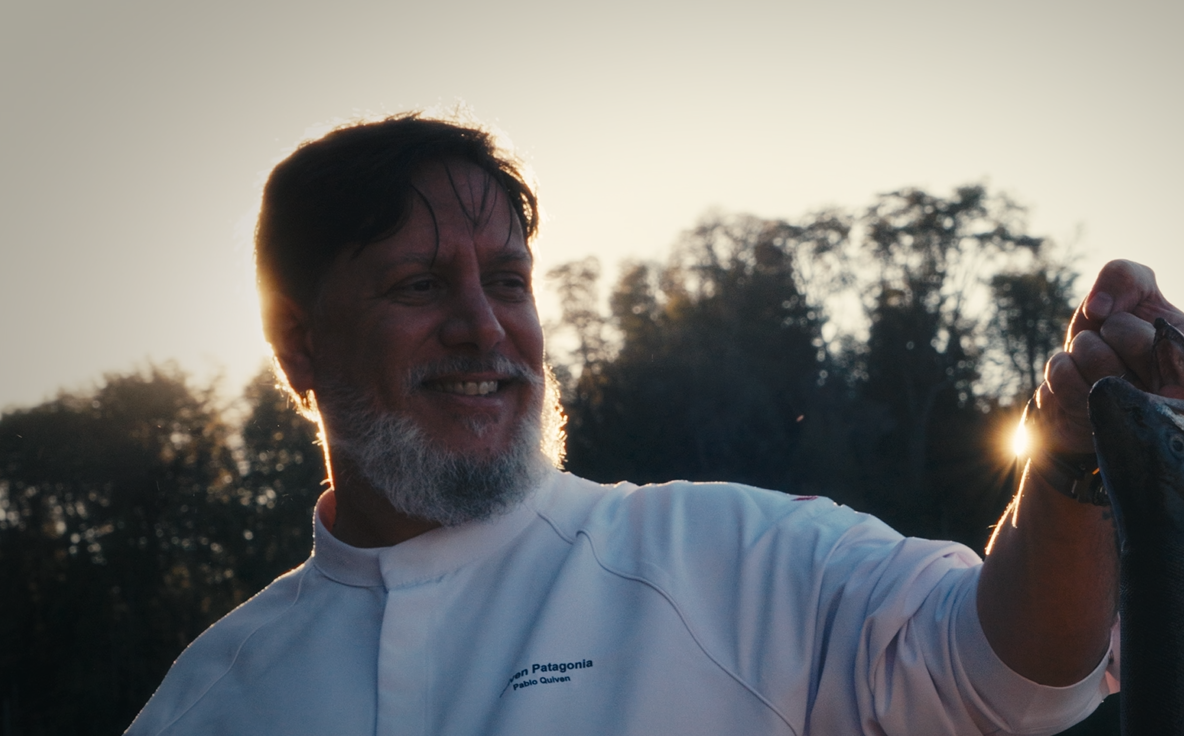
Some chefs find their identity in a technique. Others, in an ingredient. And then there are those who need to travel a much longer road before discovering that what they were searching for had always been right there, all around them.
For Pablo Quiven, that place is Patagonia.
After more than two decades building his career in Bariloche, the Argentine chef has transformed the landscapes, ingredients and character of the country’s south into the language of a cuisine deeply connected to its territory.
On November 16, Pablo Quiven, chef of Quiven Patagonia, will represent Argentina at World's Creative Chef by Fagor Professional, the international competition that brings together some of the world’s most creative chefs to explore new ways of understanding contemporary gastronomy.
Quiven will arrive at the final alongside chef Carlo Puricelli, after making it through the qualifying rounds with a proposal capable of reinterpreting Patagonia’s resources and identity through a contemporary lens.
During the competition, participants will work with some of the most advanced professional cooking equipment in the industry, provided by Fagor Professional, in a setting where creativity, innovation, technique and technology come together in the service of culinary talent.
From Buenos Aires to the South
Pablo Quiven’s story with food began long before he knew he would eventually make it his profession.
Raised in the Caballito neighbourhood of Buenos Aires, he grew up surrounded by the flavours of a family shaped by its European roots. His paternal grandmother was one of his earliest culinary influences and the person who first sparked his curiosity about aromas, ingredients and everything that happened around the stove.
Losing his mother while he was still a teenager changed many things. With his father working for much of the day, cooking also began to become a necessity. Little by little, almost without realising it, those first dishes prepared at home began to reveal a vocation.
Years later, he would begin his professional training and build his career in restaurants across Buenos Aires. Yet it was more than 1,500 kilometres away that he would discover the territory that would ultimately define his culinary identity.
In the early 2000s, he arrived in Bariloche.
And Bariloche never let him leave.
Learning to Cook a Landscape
Arriving in Patagonia forced Pablo Quiven to look at ingredients differently.
What initially seemed like a limitation eventually became an opportunity. Some of the ingredients he was accustomed to working with were unavailable, but before him lay an extraordinary territory filled with new possibilities.
Where there was no salmon, there was trout. Where certain meats were unavailable, there were venison and wild boar. Alongside them came mushrooms, lamb, fruits and ingredients from small local producers that gradually began to build an entirely new culinary vocabulary.
Quiven realised that there was little sense in trying to reproduce a cuisine that belonged somewhere else.
He had to learn to cook the territory in front of him.
Over time, that philosophy became one of the fundamental principles of his work: understanding where ingredients come from, working closely with nearby producers and transforming the products of Patagonia through a contemporary and deeply personal perspective.
From the Discipline of Great Kitchens to a Voice of His Own
Pablo Quiven’s professional career is closely connected to some of Bariloche’s leading hotel kitchens.
His experience in five-star establishments allowed him to develop the technical and professional discipline he would later bring to his own project. At Hotel Llao Llao, he also met chef Darío Gualtieri, a decisive influence on his understanding of creativity, aesthetics and the composition of a dish.
Other kitchens and new professional responsibilities followed, including Villa Huinid and Hotel Cacique Inacayal.
Each stage added new tools to a cuisine that was gradually beginning to find an identity of its own.
Because for Quiven, a dish is not built on flavour alone.
Aesthetics, textures, temperatures and even tableware are all part of the same composition. His interest in disciplines such as design and architecture inevitably emerges in a cuisine where every element has a carefully considered place, and where local artisans and producers also become part of the creative process.
Quiven Patagonia: Letting the Territory Speak
In 2016, this way of understanding gastronomy finally found a home of its own with Quiven Patagonia, the project Pablo Quiven runs alongside Mariana Trujillo on the shores of Lake Nahuel Huapi.
More than a conventional restaurant, Quiven offers a gastronomic experience built around a multi-course tasting menu, inviting diners to surrender themselves to a succession of flavours, textures and ingredients connected to the Patagonian landscape.
Trout, mushrooms, wild boar, lamb and other ingredients from the surrounding area are reinterpreted through a signature cuisine that the chef himself describes as evolutionary: a contemporary approach that uses technique to transform an ingredient without stripping it of its identity.
For Quiven, complexity is born precisely from balance.
Creamy and crunchy. Sweet and savoury. Hot and cold. Familiar flavours encounter unexpected ones, creating dishes capable of surprising diners without ever losing their connection to their origins.
All of this takes place against one of Argentina’s most recognisable landscapes: Lake Nahuel Huapi and the mountains surrounding Bariloche.
At Quiven Patagonia, that landscape is not merely a backdrop.
It is also something you can taste.
Competition as a Way to Keep Growing
Culinary competitions have accompanied Pablo Quiven at different stages of his career.
In 2010, his “Deconstruction of Rice Pudding” received the highest score at the national chefs’ tournament organised by FEHGRA. Following that experience, he spent several years serving as a judge in the competition until, twelve years later, he decided to step back onto the other side.
In 2022, he returned as a competitor in the FEHGRA Federal Chefs Tournament.
And he won.
Together with Matías Meglio, he presented a concept inspired by precisely what he had been championing for years at his restaurant: bringing the landscape and its surroundings onto the plate. The jury, chaired by Narda Lepes, recognised a creation of remarkable complexity in flavour and texture, ultimately awarding them first place.
That victory opened a new competitive chapter. In 2024, Quiven won Argentina’s national Bocuse d'Or selection and went on to represent the country at the Bocuse d'Or Americas.
For him, competing has never been solely about winning awards.
It is a way of testing himself, embracing new challenges and continuing to evolve after decades in the kitchen.
Argentina, Patagonia and Creativity Without Borders
Now, that journey continues at World's Creative Chef by Fagor Professional.
Pablo Quiven’s presence in the final represents a very particular way of understanding Argentine gastronomy: one that looks beyond the country’s most recognisable ingredients to reveal the extraordinary diversity found across its vast territory.
Argentina is also Patagonia.
It is mountains, forests and lakes. It is trout, venison, wild boar, lamb and mushrooms. It is the work of small producers and the possibility of transforming a landscape into a contemporary gastronomic experience.
On November 16, Pablo Quiven will bring that perspective to Madrid.
He will do so after more than twenty years spent learning to understand the place that once welcomed him and ultimately transformed the way he cooks.
Because some cuisines speak of technique. Others speak of innovation.
Pablo Quiven’s cuisine speaks, above all, of the place where it belongs.
