Jorge Rosales: a cuisine that carries nayarit in its memory
2026.09.16
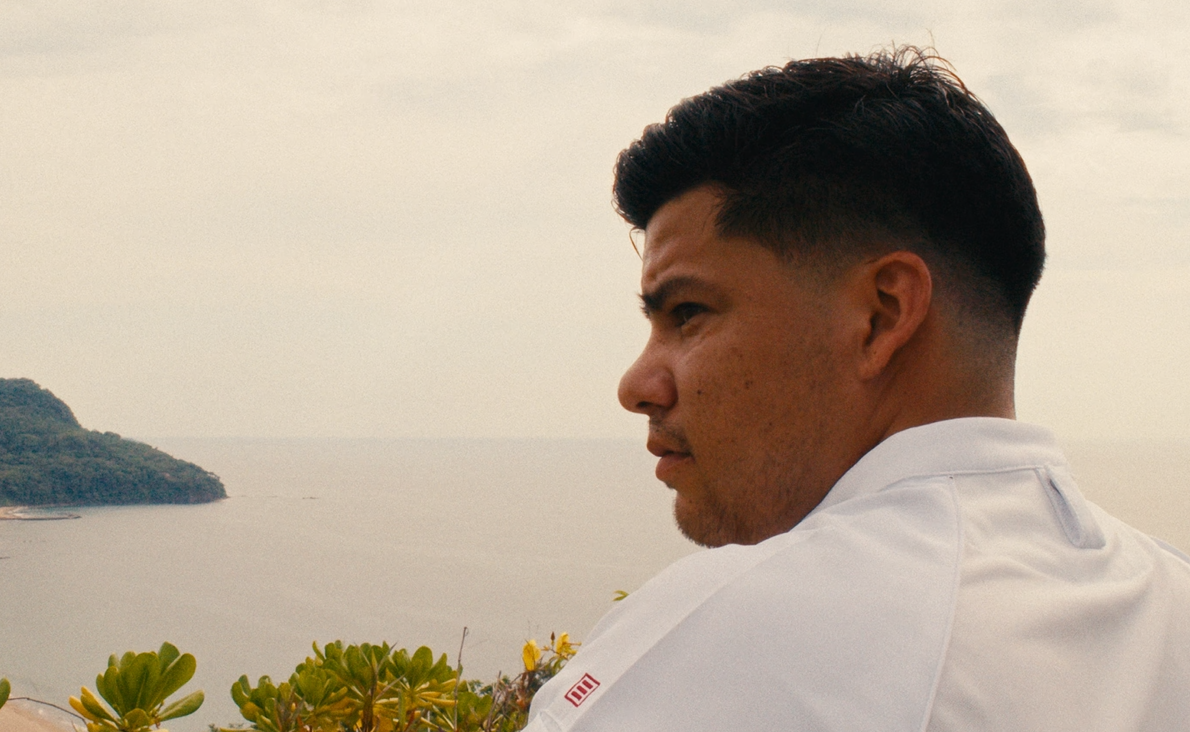
For Jorge Enrique Rosales, many of those memories lead back to the same place: Nayarit.
Currently working at Rosewood Mandarina, the Mexican chef has developed a cuisine in which territory, produce and memory become the starting points for contemporary creations. On November 16, that approach to gastronomy will arrive in Madrid, where Rosales will represent Mexico as one of the eight international finalists of World’s Creative Chef by Fagor Professional.
The competition will bring together chefs from different countries around a shared challenge: exploring how far gastronomic creativity can go when technique, innovation and technology are placed at the service of an idea. For Rosales, however, the challenge also carries a deeply personal dimension: using an international stage to tell the story of where he comes from and to showcase part of Nayarit’s extraordinary gastronomic and cultural richness.
The flavours that remain
Jorge Rosales’ relationship with food began long before it became his profession. He has traced some of his earliest culinary memories back to his grandmother’s kitchen, watching how ingredients could tell stories before he fully understood what it meant to devote a life to gastronomy.
Those family memories were gradually joined by others connected to Tepic and the everyday food of his childhood. More than a decade later, Rosales still remembers the shrimp flautas he tasted at a small seafood stall in the city: a crisp tortilla filled with shrimp, served with vegetables and a fresh, acidic cucumber and serrano chilli sauce reminiscent of aguachile. Years later, as a professional chef, he returned to that memory and reinterpreted it as a shrimp flauta with an aguachile-style cucumber sauce, coriander oil, fresh cucumber and green leaves.
Another memory centres on a vendor who would cycle through downtown Tepic selling pescado tatemado. His mother would buy mullet from him, served with a spicy tomato sauce, onion and coriander. Years later, Rosales revisited that image in a dish featuring flame-roasted salmon trout, worked with smoke and accompanied by a red sauce and a dashi and kombu broth.
In both cases, the starting point is not simply an ingredient, but the experience behind it. His cuisine does not seek to reproduce those dishes literally, but rather to identify what remains of them in memory and translate it into a different language. It is a way of reinterpreting the past without losing the reference that made it recognisable in the first place.
Leaving in order to look back at Mexico
Rosales studied gastronomy at Universidad Vizcaya’s Tepic campus, and his professional career has taken him to different parts of Nayarit and Jalisco, including Tepic, Puerto Vallarta, San Francisco and Punta Mita, as well as to Alexandria, Egypt.
That journey exposed him to different ways of understanding food. Yet after years of working with international culinary concepts, he began to look differently at what had always been closest to him. As he has explained in relation to his participation in World’s Creative Chef, Mexican cuisine went from being one possibility among many during his training to becoming the territory from which he wanted to develop his own culinary voice.
Within that renewed focus on Mexico, Nayarit occupies a central place. Not only because of its produce, but also because of its landscapes, culture and the stories embedded in the territory. That connection appears repeatedly in his dishes, where local references coexist with contemporary techniques and presentations.
One of his recent creations, for example, takes one of the most recognisable flavours of Nayarit cuisine and moves it into an entirely plant-based territory: flame-roasted melon prepared zarandeado-style, accompanied by squash, zucchini, tomatoes, coriander, lime and hoja santa. Rosales himself describes the exercise as a way of respecting the memory of a flavour while transforming its ingredients.
A cuisine connected to its territory
That exploration continues today at Rosewood Mandarina in Nayarit, where Rosales currently works. His recent work reveals an ongoing exploration of products, flavours and references connected to the state, from fish and seafood to fruit, chillies, herbs and traditional preparations.
But the territory also appears in less obvious ways. In some of his creations, Rosales has drawn inspiration from the symbols, landscapes and stories of Nayarit. A totoaba tiradito with pineapple leche de tigre, black pepper and habanero oils, cucumber, onion, coriander and a crisp element with notes of jackfruit and mango, for example, emerged from a reflection on the jaguar as a symbol of identity and belonging to the territory.
This approach offers a clearer understanding of the direction his cuisine is taking. Nayarit is not simply the source of certain ingredients; it becomes a framework from which to build a gastronomic narrative. Produce, nature, memories and culture meet on the plate and find a new expression through technique.
Competition as a new way of telling a story
Competition has also become part of Jorge Rosales’ recent journey. In March 2025, he took first place at the XIX Thierry Blouet Trophy, and in February 2026 he won first place in the flavour category at Top Chef Baja.
Reaching the final of World’s Creative Chef now presents a different kind of challenge. Fagor Professional’s competition seeks to recognise not only technical execution, but also creativity, innovation and the ability to transform a gastronomic idea into an experience. In Rosales’ case, that narrative dimension is particularly significant: as he has explained while preparing for the final, his intention is for the jury to understand not only what they are tasting, but why the dish exists and what it represents.
Representing Mexico therefore carries a meaning that extends beyond the competition itself. Rosales has publicly expressed the responsibility of bringing Nayarit’s products, stories, coastline and culture to an international stage, while also celebrating the richness and diversity of Mexican cuisine.
Nayarit, on its way to Madrid
The proposal Jorge Rosales is preparing for World’s Creative Chef emerges precisely from this relationship between gastronomy and territory. Through it, he aims to bring elements connected to Nayarit and Riviera Nayarit to Madrid, together with references to Wixárika culture, focusing on the relationship between nature, produce, identity and cuisine.
It is an intention entirely consistent with the path he has been building over recent years: looking back at the flavours he knows, recovering memories and references from his surroundings, and asking how they can take on a new form without losing what makes them recognisable.
On November 16, that perspective will arrive at the final of World’s Creative Chef by Fagor Professional in Madrid. There, Jorge Rosales will have the opportunity to present a Mexican cuisine that does not attempt to summarise an extraordinarily diverse country, but instead seeks to tell one particular part of its story with depth: Nayarit.
Because perhaps one of the most interesting ways to speak about creativity is precisely this: to travel, learn and evolve, only to return and see the place you come from differently. And to transform everything you have learned into a cuisine capable of making a memory, a landscape or a local flavour understood far beyond its borders.
