


When to choose a gas configuration with a half-size griddle on the Kore 700
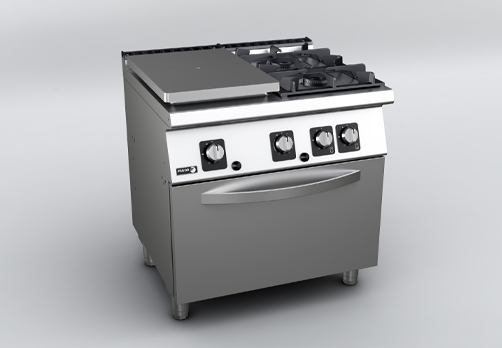
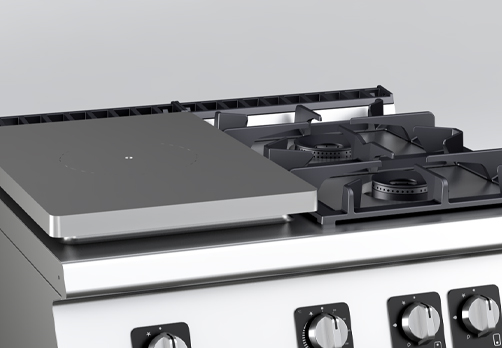
In kitchens where the menu combines dishes cooked in pans with those finished directly on a hot surface, an industrial cooker with two burners and a griddle can help to organise the workstation more efficiently. Its appeal lies not only in combining two functions within a single unit, but also in allowing the chef to alternate between stir-frying, reducing sauces, quick searing or small-scale grilling without having to move to another area of the cooking line. This configuration is particularly useful when space is limited, but the kitchen needs to keep several techniques active during the same shift.
This choice makes sense in establishments where the half-size griddle does not replace other equipment, but acts as a strategic support within the kitchen team. For menus featuring breakfasts, daily specials, meat dishes, vegetables, hot sandwiches or high-turnover dishes, butane gas hobs with a griddle can be a valuable option when the premises’ layout or energy supply dictates the configuration of the cooking station. The key is that the energy source must be compatible with the available infrastructure and the actual intensity of use, not merely based on an initial purchasing preference.
Implementation criteria to consider before evaluating the investment
Before comparing models, the price of an industrial cooktop should be analysed in relation to the actual utilisation of the workstation. A mixed configuration can be more cost-effective when it avoids the need for separate modules, reduces movement and allows various tasks to be carried out from a single work area. The investment, therefore, should not be viewed solely as the cost of the equipment, but as a decision regarding space, efficiency, energy consumption, staff organisation and continuity during service.
In projects requiring a more self-sufficient setup, gas cookers with an oven and griddle may be a sensible choice when the lower oven is genuinely integrated into day-to-day operations. If it is used to keep dishes warm, finish them off or cook complementary dishes, the unit offers greater value than a stand-alone solution. If there is no such intended use, it is worth assessing whether the configuration meets the establishment’s actual operational needs or whether it would be more appropriate to reserve that space for another cooking module.
